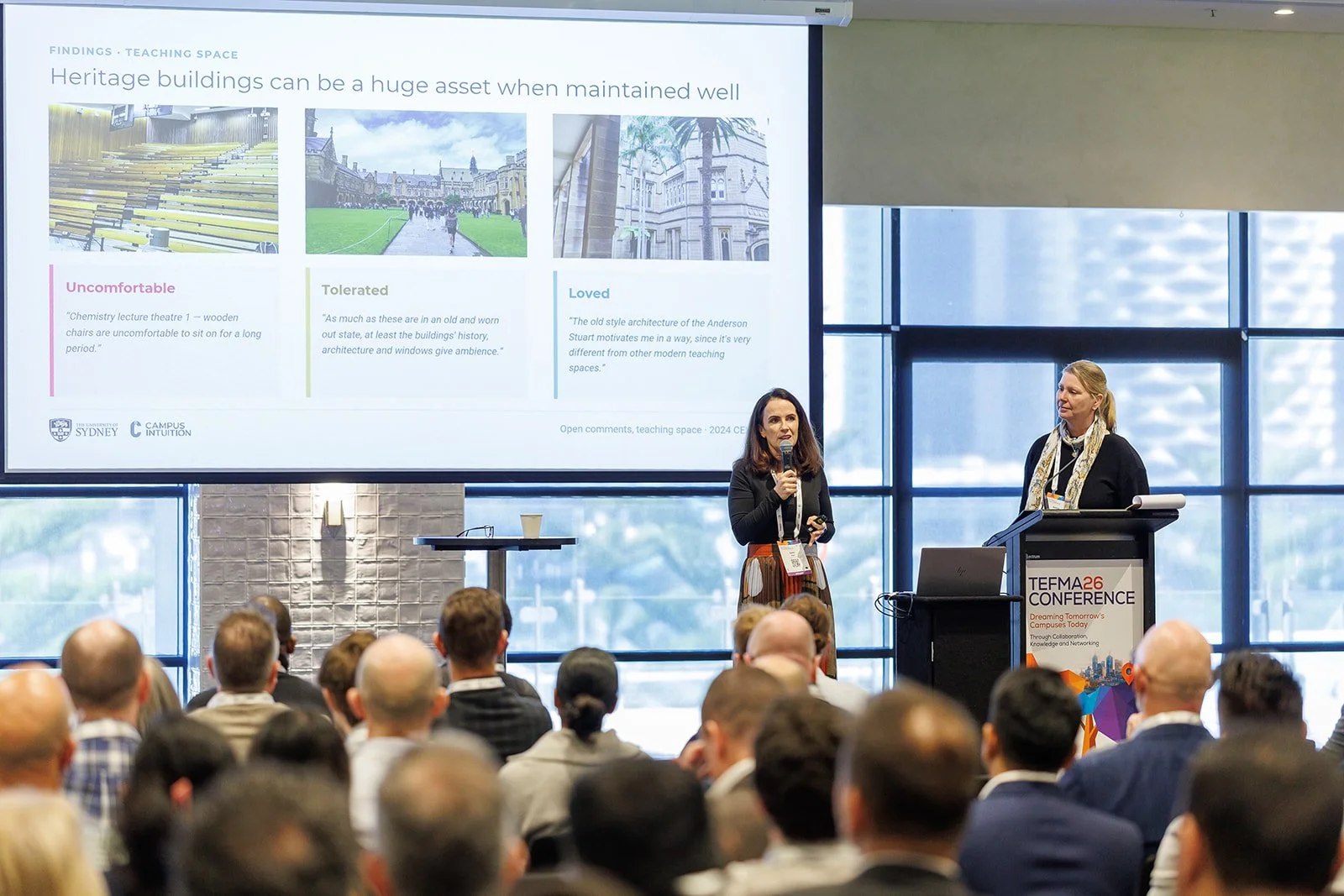
Credit: Pat Brunet / Event Photos Austra
TEFMA 2026 Conference focused on how shifting generational expectations, changing demographic footprints, and digital transformation are reshaping tertiary education and campus infrastructure.
The traditional model of completing a degree at age 21 for a single lifelong career is shifting. Increased life expectancy and dynamic career landscapes require continuous upskilling, leading to a rise in mature-age learners, micro-credentials, and lifelong learning pathways.
While formal qualifications remain important, students prioritise transferable human skills (adaptability, critical thinking, collaboration) and practical experience to prepare for constantly evolving job markets.
Demographic data shows rising rates of stress, anxiety, and mental health challenges among young people. Universities are increasingly expected to act as holistic support hubs, integrating health, wellbeing, and social spaces directly into campus design.
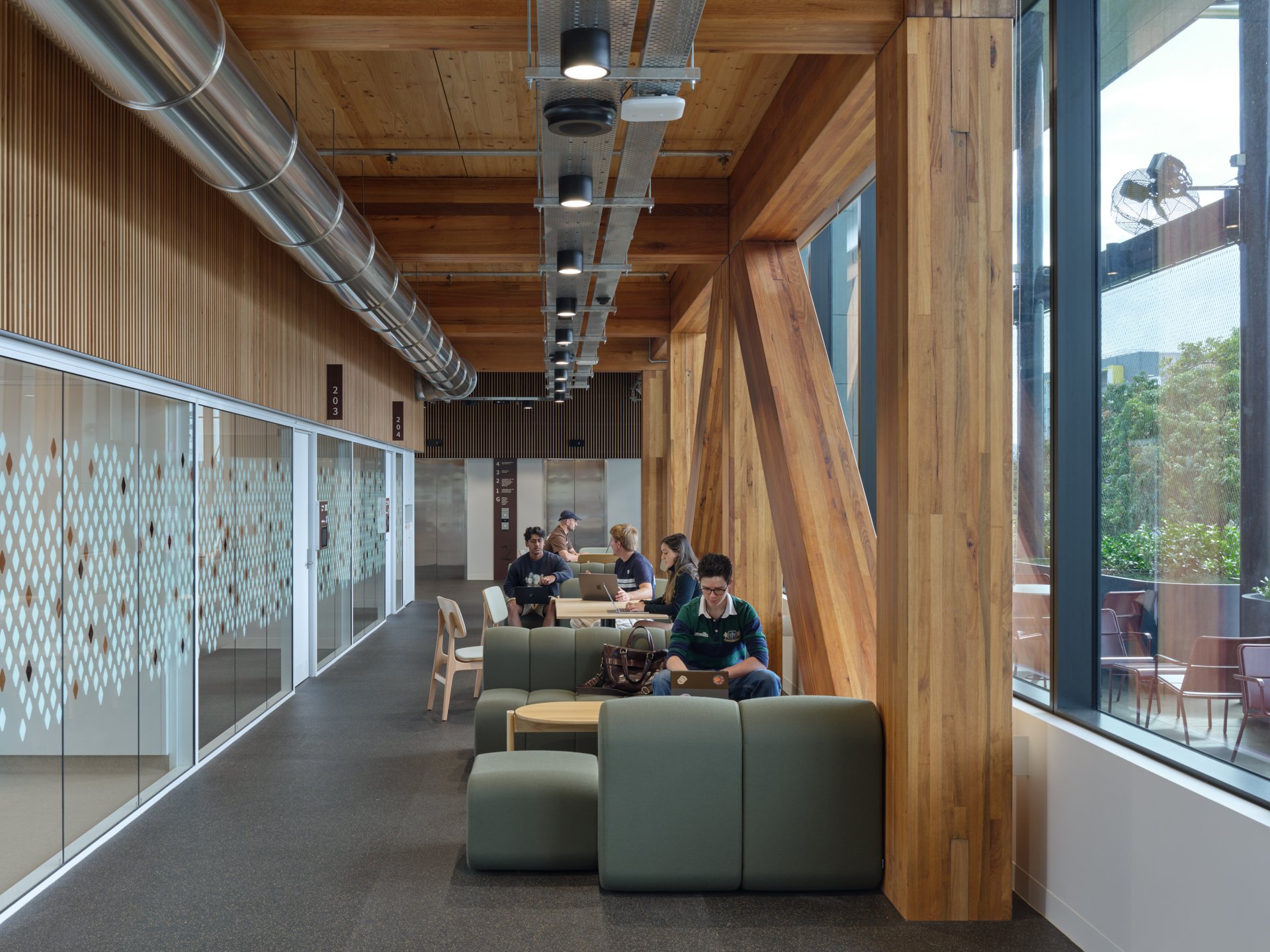
James Cook University, Yeinie Building
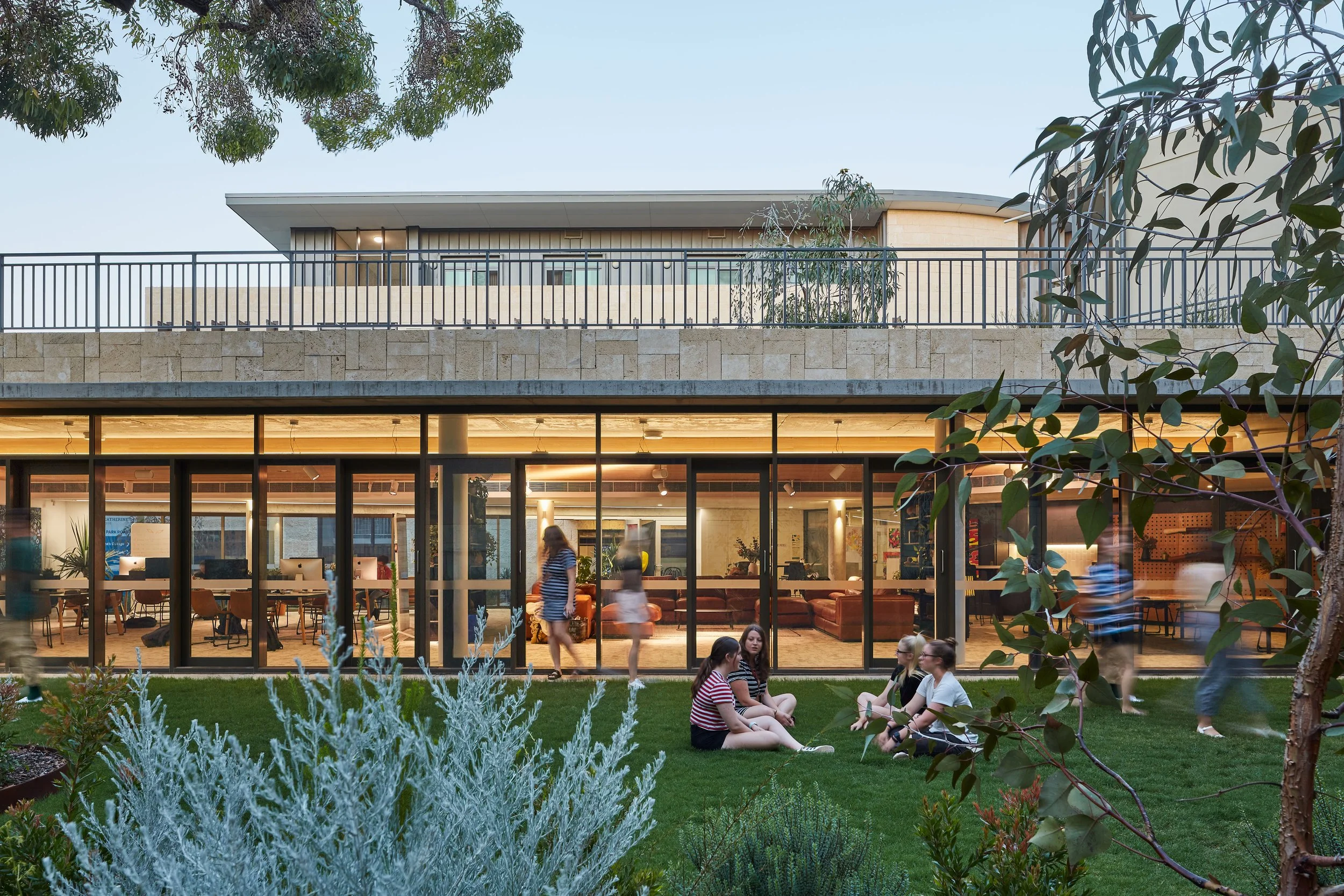
St Catherine’s College, Dandjoo Darbalung Centre & Accommodation
Contact

The impacts on the Tertiary Campus.
Research indicates the majority of tertiary students prefer a hybrid learning model over fully remote or fully on-campus setups. The role of the physical campus has already shifted from content delivery to a destination for connection, collaboration, and high-value hands-on experiences.
AI tools have moved rapidly from novelty to integration. In tertiary settings, AI requires updates to assessment models, personalised learning pathways, and administrative automation, prompting institutions to focus teaching on irreplaceable human competencies (creativity, leadership, complex problem-solving).
These shifts mean traditional, fixed-lecture theatres in legacy campuses are becoming obsolete. Campuses require flexible, modular, open-plan spaces, collaborative group zones, and technology-dense active learning environments.
Campus Infrastructure can be made smart through data analytics and automated building management systems help institutions make informed planning decisions for capital expenditure, optimise space utilisation, manage energy consumption, and create seamless digital-to-physical user experiences for students.